
"coffee branch selection"
1000 article(s) found

Fine Coffee Science explains the picking of coffee beans in detail
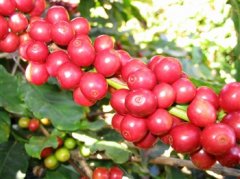
After 3 or 4 years of growth, the coffee tree matures and begins to bear fruit, and one fruit will be arranged in clusters or clusters along the branches. Of course, the coffee beans we see are the seeds of coffee trees. The outside of the seed is a layer of peel, which can be picked as soon as it turns red. Under the red skin (exocarp) there is a layer of pulp (mesocarp), inside is a small thin layer, and then there is a layer of parchment

Introduction to the treatment of the shape characteristics of Honduran coffee beans
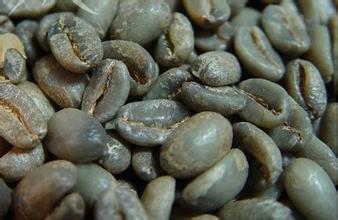
The granules of coffee beans in Honduras are large in shape, uniform in size and glossy in color. In order to facilitate harvesting, farmers will prune the coffee trees to no more than 150 centimeters, because if they grow too high, they have to set up ladders to pick, which is not only time-consuming, but also may damage the trees by bending branches. As the ripening period of each fruit of the coffee bean is different, it is necessary to keep the coffee bean in good condition.

Mixed aroma San Juan, Honduras, Xido boutique coffee beans cultivation situation, geographical location, climate sea
For coffee production, the geographical conditions of Honduras are no less than those of its neighboring coffee-producing countries such as Guatemala and Nicaragua. There are 280000 hectares of coffee plantations in Honduras, mainly small coffee plantations, most of which are less than 3.5ha. These coffee plantations account for 60% of the total coffee production in Honduras. In the coffee garden, because the planting land belongs to

Flavor Description of Colombia Coffee Bean Grind Scale Variety Treatment Taste Introduction
Flavor Description of Colombia Coffee Bean Grind Scale Variety Treatment Taste Introduction Colombia coffee varieties are mainly Arabica coffee. Plants are small trees or large shrubs, 5-8 meters high, usually multi-branched at the base; old branches are gray, nodes expand, young branches glabrous, compressed. Leaves thinly leathery, ovate-lanceolate or lanceolate, 6-14 cm long, 3. 5 -5 cm wide, apex long acuminate, acuminate

Columbia Coffee Lazimus Manor introduces Starbucks Colombian Coffee
The main varieties of Colombian coffee are small grains of coffee. Plants are small trees or large shrubs, 5-8 m tall, usually much branched at base; old branches gray-white, nodes dilated, young branches glabrous, compressed. Leaves thinly leathery, ovate-lanceolate or lanceolate, 6-14 cm long and 3.5-5 cm wide, tip long acuminate, acuminate part 10-15 mm long, base cuneate or slightly obtuse, rarely rounded, entire or
World boutique coffee producing area Honduras specially selected Highland Coffee
Honduras: special highland coffee flavor and taste characteristics: good flavor, rich and mellow, suitable for mixed drinking. Honduras is located in the north of Central America, facing the Caribbean Sea to the north, the Gulf of Fonseca in the Pacific Ocean to the south, Nicaragua and El Salvador to the east and south, and Guatemala to the west, mostly mountains and plateaus. It has a tropical climate, mild temperature, abundant rainfall, and is a coffee producer.

The treatment of grinding degree and roasting degree of San Juan Xido boutique coffee beans in Honduras
In fact, according to Ms. Knudsen, people started drinking fine coffee, but later, due to the growing demand for coffee, the discovery and use of new coffee varieties led to the decline of coffee quality. later, people even began to dislike this bad coffee and began to turn to other drinks. In this case, Ms. Knudsen's re-recognition

The cultivation of sweet San Juan Xido boutique coffee beans in Honduras geographical location and climate sea
In fact, according to Ms. Knudsen, people started drinking fine coffee, but later, due to the growing demand for coffee, the discovery and use of new coffee varieties led to the decline of coffee quality. later, people even began to dislike this bad coffee and began to turn to other drinks. In this case, Ms. Knudsen's re-recognition

Introduction to the Flavor description of Grinding scale Flavor of Coffee beans in Colombia
The main varieties of Colombian coffee are small grains of coffee. Plants are small trees or large shrubs, 5-8 m tall, usually much branched at base; old branches gray-white, nodes dilated, young branches glabrous, compressed. Leaves thinly leathery, ovate-lanceolate or lanceolate, 6-14 cm long and 3.5-5 cm wide, tip long acuminate, acuminate part 10-15 mm long, base cuneate or slightly obtuse, rarely rounded, entire or

Honduran Coffee beans with large granule shape introduce San Juan Xido region
The granules of coffee beans in Honduras are large in shape, uniform in size and glossy in color. In order to facilitate harvesting, farmers will prune the coffee trees to no more than 150 centimeters, because if they grow too high, they have to set up ladders to pick, which is not only time-consuming, but also may damage the trees by bending branches. As the ripening period of each fruit of the coffee bean is different, it is necessary to keep the coffee bean in good condition.
Grinding Calibration of Colombian Coffee beans introduction of Variety producing areas by Manor treatment
The main varieties of Colombian coffee are small grains of coffee. Plants are small trees or large shrubs, 5-8 m tall, usually much branched at base; old branches gray-white, nodes dilated, young branches glabrous, compressed. Leaves thinly leathery, ovate-lanceolate or lanceolate, 6-14 cm long and 3.5-5 cm wide, tip long acuminate, acuminate part 10-15 mm long, base cuneate or slightly obtuse, rarely rounded, entire or

Coffee beans from Honduras, a coffee producer in northern Central America, introduce fine coffee.
The granules of coffee beans in Honduras are large in shape, uniform in size and glossy in color. In order to facilitate harvesting, farmers will prune the coffee trees to no more than 150 centimeters, because if they grow too high, they have to set up ladders to pick, which is not only time-consuming, but also may damage the trees by bending branches. As the ripening period of each fruit of the coffee bean is different, it is necessary to keep the coffee bean in good condition.

Introduction to the characteristics of varieties with flavor and taste of Honduran coffee beans
From its independence in 1821 to 1978, Honduras has had 139 coups, making it one of the countries with the most frequent coups in Latin America. Ramon Bilda Morales of the Liberal Party won the election in 1957 as president. Oswald Lopez Arellano, commander of the armed forces, launched a coup instigated by the United States in 1963, overthrew the Morales regime, and was elected general in 1965.

Treatment method of grinding degree and baking degree of San Juan Xido boutique coffee beans with mixed aroma
In fact, according to Ms. Knudsen, people started drinking fine coffee, but later, due to the growing demand for coffee, the discovery and use of new coffee varieties led to the decline of coffee quality. later, people even began to dislike this bad coffee and began to turn to other drinks. In this case, Ms. Knudsen's re-recognition

Columbia Coffee Manor introduces Lazmus Manor Colombian small Coffee
The main varieties of Colombian coffee are small grains of coffee. Plants are small trees or large shrubs, 5-8 m tall, usually much branched at base; old branches gray-white, nodes dilated, young branches glabrous, compressed. Leaves thinly leathery, ovate-lanceolate or lanceolate, 6-14 cm long and 3.5-5 cm wide, tip long acuminate, acuminate part 10-15 mm long, base cuneate or slightly obtuse, rarely rounded, entire or

A brief introduction to the description of the flavor, taste and aroma characteristics of fine coffee beans in Santa Rita Manor
A special combination of factors, latitude, altitude, soil, plant origin of species and varieties of coffee making in Colombia, rain patterns produced by the climate and tropical convergence of coffee growing areas, changing topography, luminosity, favorable temperature range throughout the year, moderate and Rain Water distribution, including selective logging.

Brief introduction to the treatment method of Grinding scale and Baking degree of Fine Coffee beans in Honduras
Coffee in Honduras is dried in the sun, so there is always a hint of fruit in the taste. Honduran coffee has a rich and mellow taste, taste is not astringent, not sour, mellow and aroma are very high, quite personality. Honduran coffee can lead to multiple levels of flavor depending on the degree of roasting. Medium baking can exert the sweetness of beans.

Description of flavor and aroma characteristics of San Juan Xido boutique coffee beans with large particle shape
For coffee production, the geographical conditions of Honduras are no less than those of its neighboring coffee-producing countries such as Guatemala and Nicaragua. There are 280000 hectares of coffee plantations in Honduras, mainly small coffee plantations, most of which are less than 3.5ha. These coffee plantations account for 60% of the total coffee production in Honduras. In the coffee garden, because the planting land belongs to

A brief introduction to the history and culture of the origin and development of boutique coffee beans in Santa Rita Manor
A special combination of factors, latitude, altitude, soil, plant origin of species and varieties of coffee making in Colombia, rain patterns produced by the climate and tropical convergence of coffee growing areas, changing topography, luminosity, favorable temperature range throughout the year, moderate and Rain Water distribution, including selective logging.
How to treat fresh coffee fruit into raw coffee beans
The variety of coffee treated with raw beans certainly determines the natural flavor, but the treatment of raw beans determines the acquired quality. Selected coffee attaches great importance to flavor and quality, so it pays special attention to the technology and details of processing. Harvest: the harvest method is one of the criteria for judging selected coffee. if calculated from the time of germination, Arabica coffee will take about 5 years to blossom and bear fruit. Brazil